Driving test tips
The 10 most common reasons people fail the driving test
Counting down the ten most common serious faults from DVSA's published test data. It isn't parallel parking — the top two, every single year, are junctions and mirrors.
The countdown
- 10 — Move off: control. Stalling, rolling back, or pulling away with the handbrake still on.
- 9 — Positioning: normal driving. Hugging the kerb, or drifting towards the middle of the road.
- 8 — Move off: safely. Pulling away without proper observation.
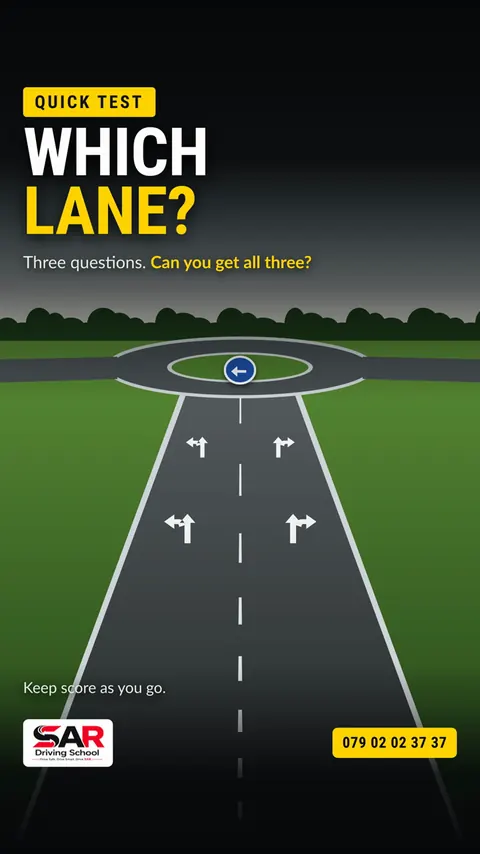
- 7 — Response to signs: road markings. Straddling lanes, ignoring hatched areas, or the wrong lane at a roundabout.
- 6 — Response to signs: traffic signs. Missing a give-way, a no-entry, or a change in the speed limit.
- 5 — Control: steering. Losing steering control, mounting a kerb or over-correcting.
- 4 — Response to signs: traffic lights. Moving on red-and-amber, sitting through a green, or blocking a box junction.
- 3 — Junctions: turning right. Cutting the corner, or sitting in the wrong position to turn.
- 2 — Mirrors: changing direction. Turning, moving out or changing lane before checking the mirror.
- 1 — Junctions: observation. Emerging without looking properly — or looking, and not seeing.
What it tells you
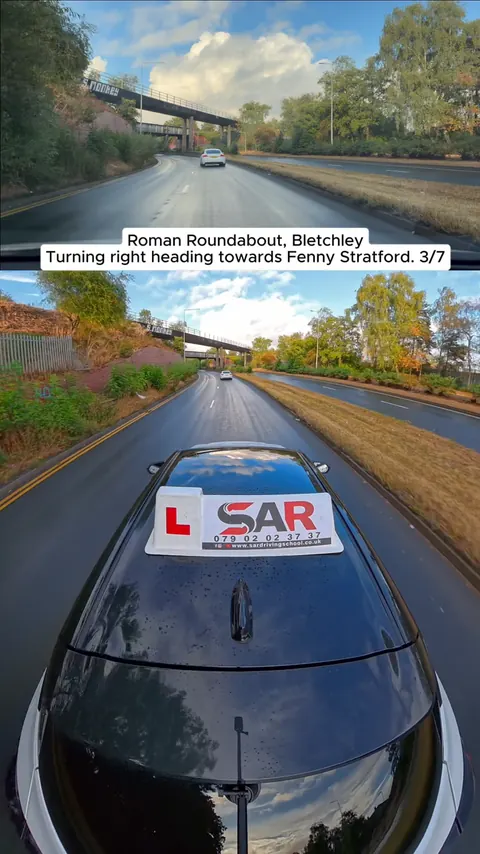
Numbers one and two come down to the same thing: looking properly, in good time. That is exactly what structured lessons drill on every drive. Four parts of our Roman Roundabout series are about precisely this.
Source
Based on DVSA's published test-fault data. The order shifts slightly from year to year; the top two have not.
Skills this covers
Part of the structured SAR syllabus your instructor tracks each lesson.
Filmed by a SAR Driving School instructor. Road layouts, signs and markings change — always drive to what you can see on the day. No road is guaranteed to appear on a driving test.