Water Eaton, Bletchley
Can you spot the mistake? Speed humps on a mock test
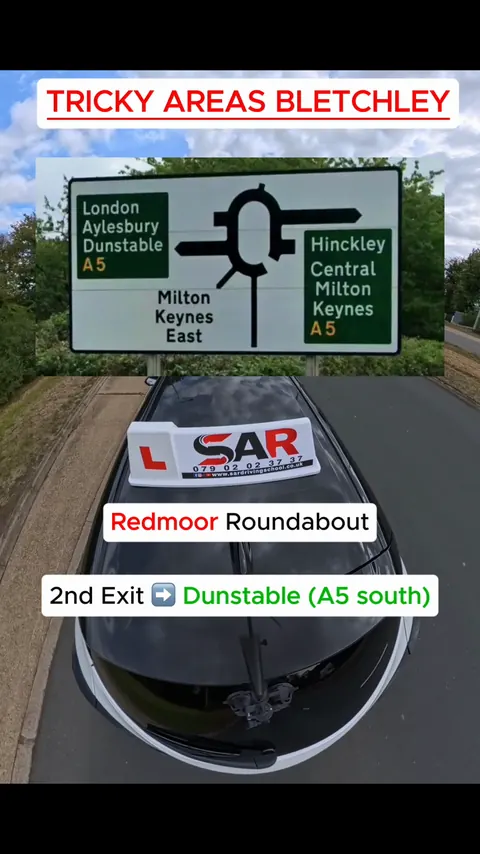
A real mock-test debrief. On the double roundabout at Water Eaton there is a large sign warning of a speed hump ahead. The road marking is faded — but the sign isn't. What speed should you be doing over a raised hump, and what did the learner do?
What happened
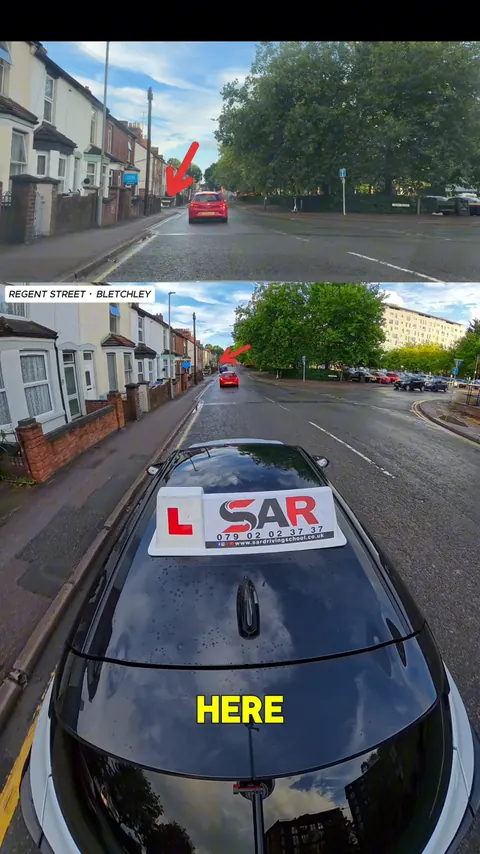
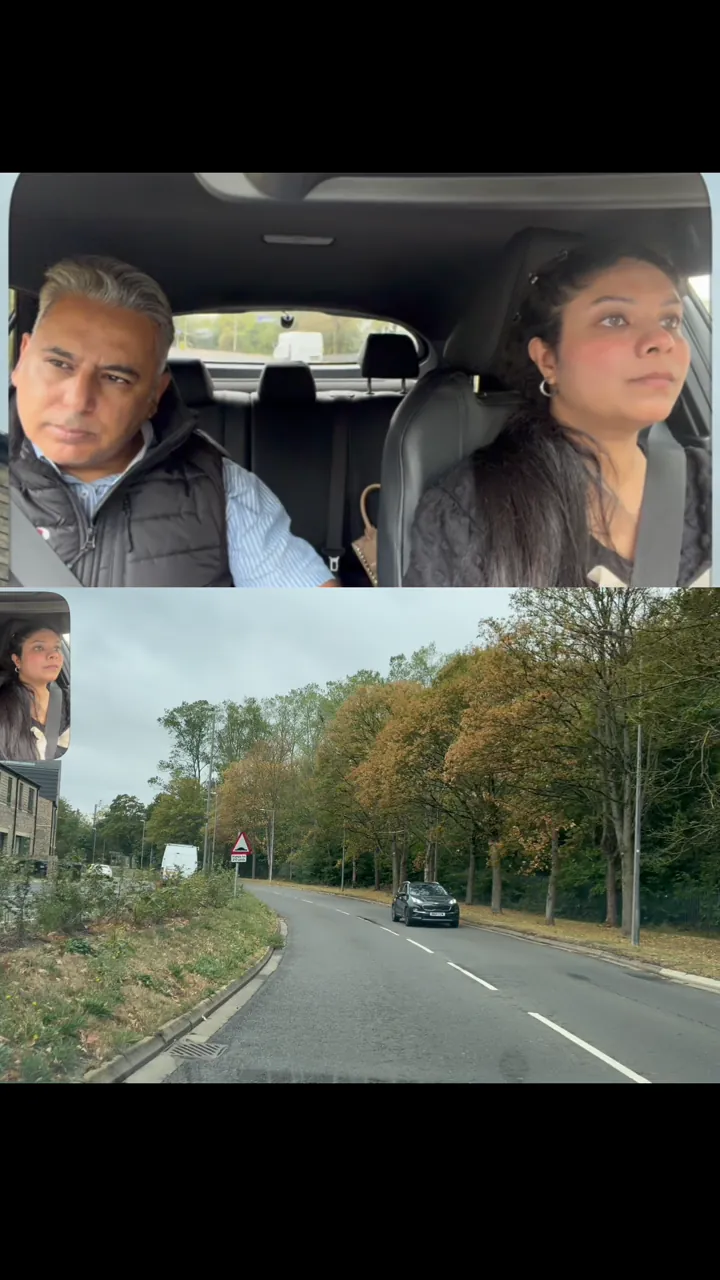
Coming off the double roundabout at Water Eaton there is a big sign on the left-hand side warning of a speed hump ahead. The hump's own marking is a bit faded, but you can still see the raised area. The learner didn't remember what speed they were doing over it — and the instructor's estimate was around 26 mph.
What should have happened
- The sign is the cue. When you see a speed-hump sign, you should be planning to slow down before you reach the hump — not reacting to the hump itself.
- A raised hump with a tarmac surface like this one is normally taken at roughly 10–12 mph.
- Faded markings are not an excuse: there are still large signs around 50–80 yards before the hump.
Why it matters on test
Approaching a traffic-calming feature too fast is a control and awareness issue. It can be marked as a fault in its own right, and it makes the car harder to control over the hump.
Remember
Signs before markings. If the paint is faded, the sign still tells you what's coming — plan your speed from the sign.
Skills this covers
Part of the structured SAR syllabus your instructor tracks each lesson.
Filmed by a SAR Driving School instructor. Road layouts, signs and markings change — always drive to what you can see on the day. No road is guaranteed to appear on a driving test.